
HERO Bath · SPE/PEM Bath Generator
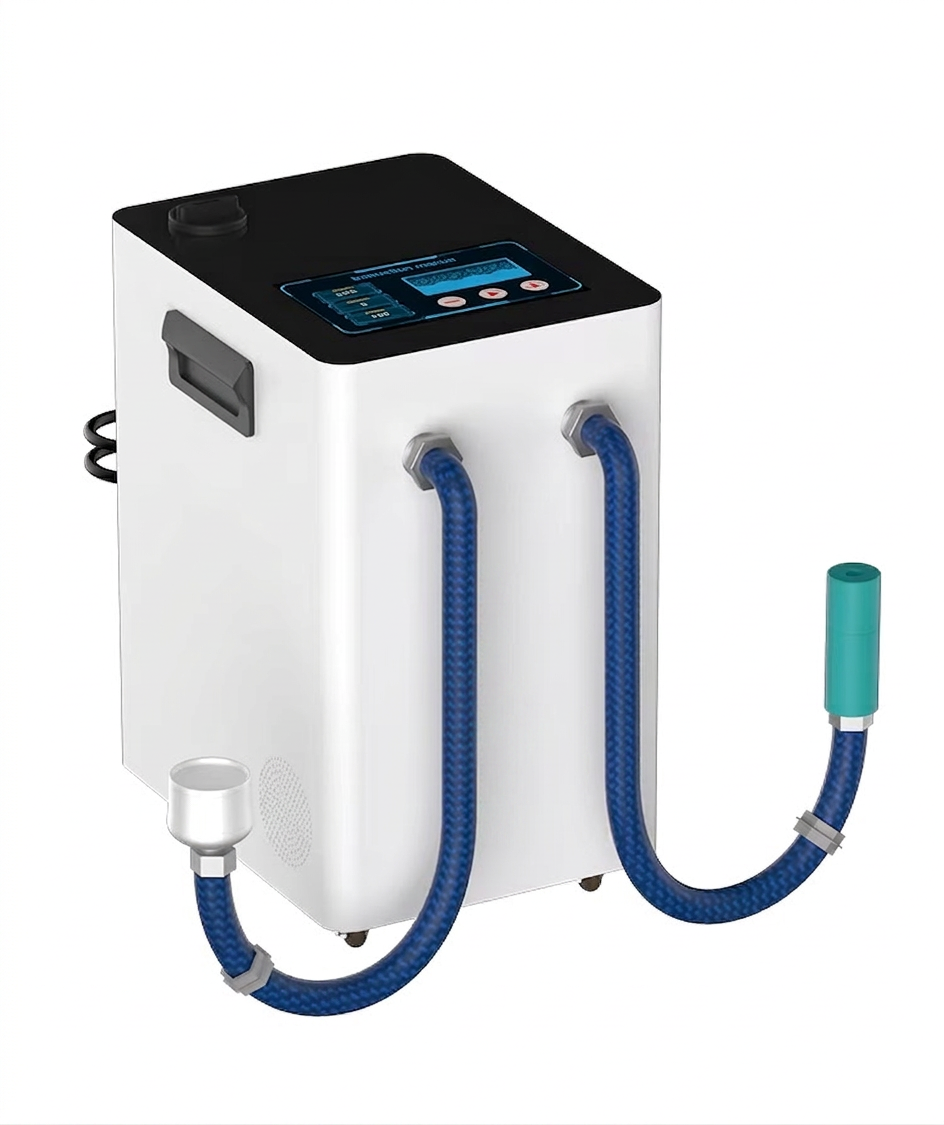
Hydrogen Bath Generator — Engineered SPE/PEM System
The HERO Bath is a dedicated hydrogen bath generator built around an SPE/PEM electrolysis stack. It delivers a stable, measurable dissolved H₂ concentration into the bath — not a novelty additive, not a peak-and-decay tablet reaction.





CE marked · FCC Part 15 Subpart B (independent-laboratory tested) · ISO 13485 & ISO 9001 manufacturing.
What is a hydrogen bath generator?
A hydrogen bath generator is an appliance that produces molecular hydrogen (H₂) from water by electrolysis and disperses it into a bath as either nanobubbles or hydrogen-rich water. Unlike hydrogen bath tablets — which dissolve into a fixed dose accompanied by fillers such as magnesium or citric acid — a generator produces H₂ on demand at a controllable flow rate, for the full duration of the session, with no consumables and no additional chemistry entering the water.
How SPE/PEM electrolysis works
An SPE/PEM (Solid Polymer Electrolyte / Proton Exchange Membrane) electrode stack splits purified water at the anode. Protons migrate through an ion-exchange membrane to the cathode, where they recombine as molecular H₂ at 99.991% purity. Oxygen produced at the anode is separated and vented. No salts, no chlorine, no ozone byproducts — because there is no chemical electrolyte in the water path, only the membrane itself.
The gas is then dispersed into bath water as nanobubbles — sub-micron bubbles whose small diameter increases surface area and slows buoyant rise, which is what allows measurable dissolved H₂ concentration to build in an open bath rather than immediately outgassing.
Flow rate and dissolved H₂ concentration
Two variables determine how much hydrogen a bath actually holds, and most buyers are never shown either of them:
- Flow rate (L/min or ml/min) — how fast the machine delivers H₂ or hydrogenated water into the tub. Determines time-to-saturation across a full bath volume.
- Dissolved H₂ concentration (ppm or ppb) — how much hydrogen is actually in the water at the point of delivery. A spec sheet that quotes gas output without dissolved concentration is describing the machine, not the bath.
Quality hydrogen bath systems are a serious purchase category, and pricing varies widely based on electrode surface area, membrane quality, and gas output — not just brand. Two generators at very different price points can produce very different dissolved concentrations, and the only way to know is to ask for both numbers together.
| Variable | Why it matters | HERO Bath |
|---|---|---|
| Dissolved H₂ | Actual concentration in bath water at delivery | >2,000 ppb |
| Flow rate | Time-to-saturation across bath volume | 3,750 ml/min |
| H₂ purity | Output composition, no contaminants | 99.991% |
HERO Bath specification sheet
Manufacturer-published specifications. Contact us for the full technical datasheet.
| Electrolysis method | SPE/PEM (Solid Polymer Electrolyte / Proton Exchange Membrane) |
| Flow rate | 3,750 ml/min hydrogenated water delivered into bath |
| Max dissolved H₂ | >2,000 ppb (2.0 ppm) at point of delivery |
| Electrode material | Titanium substrate with platinum-group catalyst coating |
| Membrane type | Proton exchange membrane (perfluorosulfonic acid) |
| Tank capacity | 3 L (distilled water recommended, TDS < 30) |
| Session duration | Timer controlled — see manual for recommended cycle |
| Power / voltage | 100–240 V · 50–60 Hz (worldwide) |
| Certifications | CE · FCC Part 15 Subpart B · RoHS · ISO 9001 · ISO 13485 |
| Warranty | 12 months from delivery |
| Weight / dimensions | 14 kg · 260 × 340 × 420 mm |
| Format | Portable benchtop — no plumbing required |
| Price | $5,397 USD (A$7,777.06 live conversion) |
Hydrogen Bath Generator vs. Hydrogen Bath Tablets — What actually determines bath quality
Comparison based on manufacturer-published engineering specifications.
The two categories deliver H₂ differently. The comparison below focuses on the variables that determine dissolved concentration in the tub and cost over time — not brand claims.
Comparison based on manufacturer-published engineering specifications. Hydrogen Machines products are general wellness devices; certifications and specifications describe hardware and manufacturing, not medical or therapeutic status.
Cost-over-time illustration
Assuming an average of A$10 per hydrogen tablet dose:
- • 100 baths on tablets ≈ A$1,000 in consumables · HERO Bath upfront: A$7,777.06 (fixed)
- • 500 baths on tablets ≈ A$5,000 in consumables · HERO Bath upfront: A$7,777.06 (fixed)
- • 1,000 baths on tablets ≈ A$10,000 in consumables · HERO Bath upfront: A$7,777.06 (fixed)
Illustrative only. Actual tablet cost varies by brand and dose. Electricity and water for the generator not included.
Tablets are a legitimate lower-cost entry point for occasional use. The generator becomes the engineered choice when hydrogen bathing is a regular part of the household routine — for the people bathing several times a week, the frequency, not the individual bath, is what shifts the economics.
Why the price is what it is
Cost in this category is driven by componentry, not branding. Four factors determine what a hydrogen bath generator actually costs to build:
- Electrode surface area & material — platinum-group catalyst on titanium substrate determines gas output rate and stack longevity.
- Membrane grade — perfluorosulfonic acid PEM material determines proton conductivity, purity and durability across duty cycles.
- Gas output rate — higher stable flow requires larger stacks, higher-spec power electronics, and better water management.
- Build quality & certifications — CE, FCC Part 15B and ISO 13485-aligned manufacturing add real cost that generic import products don't carry.
At $5,397 (A$7,777.06), the HERO Bath sits below the top of the category on price but matches or exceeds it on the componentry that actually determines dissolved H₂ delivery. It's engineered value — the same core SPE/PEM principles as premium systems, priced for what's inside the chassis rather than what's on the label.
Compliance & manufacturing
CE Mark
European conformity for electrical safety and product compliance.
FCC Part 15 Subpart B
US electromagnetic compliance — independent-laboratory tested in an accredited anechoic chamber, not self-declared. Certificate LST250598095F.
ISO 13485 & ISO 9001
Manufactured in facilities operating under ISO 13485 (medical-device-adjacent quality system) and ISO 9001 quality management frameworks.
These certifications describe hardware and manufacturing — electrical safety, electromagnetic compliance, and quality-system rigour. They indicate a manufacturer built for regulated medical-adjacent device production, not a generic import product. They do not describe medical or therapeutic status; the HERO Bath is a general wellness appliance.
Frequently asked questions
What is a hydrogen bath generator?
A hydrogen bath generator is an appliance that produces molecular hydrogen (H₂) from water via SPE/PEM electrolysis and delivers it into a bath — either as hydrogen-rich water or as nanobubble gas dispersion. Unlike hydrogen bath tablets, it produces H₂ on demand at a controllable flow rate and dissolved concentration, without introducing additional chemistry into the water.
How is a hydrogen bath generator different from hydrogen bath tablets?
A generator produces H₂ electrolytically at a stable rate for the full session — dissolved concentration is held while the machine runs. Tablets dissolve on a peak-and-decay curve, so ppm rises briefly and then falls, and they typically include magnesium, citric acid, or other fillers alongside the hydrogen-generating reaction. A generator is a one-time capital purchase with no consumables; tablets are an ongoing per-session cost.
What dissolved hydrogen concentration (ppm) should I look for in a hydrogen bath?
Look at two numbers together: dissolved H₂ concentration at the point of delivery, and flow rate into the tub. A high ppm figure on a low flow rate saturates a small volume of water quickly but takes a long time to lift a full bath. The HERO Bath delivers >2,000 ppb (2.0 ppm) at 3,750 ml/min into the bath.
Is the HERO Bath hydrogen bath generator safe and compliant?
The HERO Bath carries CE marking, FCC Part 15 Subpart B (independent-laboratory tested electromagnetic compliance), RoHS, ISO 9001 and ISO 13485 manufacturing certifications. Documentation is published at hydrogenmachines.com.au/certifications. It is a general wellness appliance, not a medical device — no therapeutic claims are made.
How much does a hydrogen bath generator cost?
Serious hydrogen bath generators span a wide price range depending on electrode surface area, membrane grade, gas output, and manufacturing certifications. The HERO Bath is priced at $5,397 (A$7,777.06) direct from the manufacturer, with free worldwide delivery and duties included.
HERO Bath Hydrogen Bath Generator
Engineered SPE/PEM. Verifiable dissolved H₂. Direct-price.
$5,397 · A$7,777.06 live conversion · free worldwide delivery · duties included · 24-month warranty.