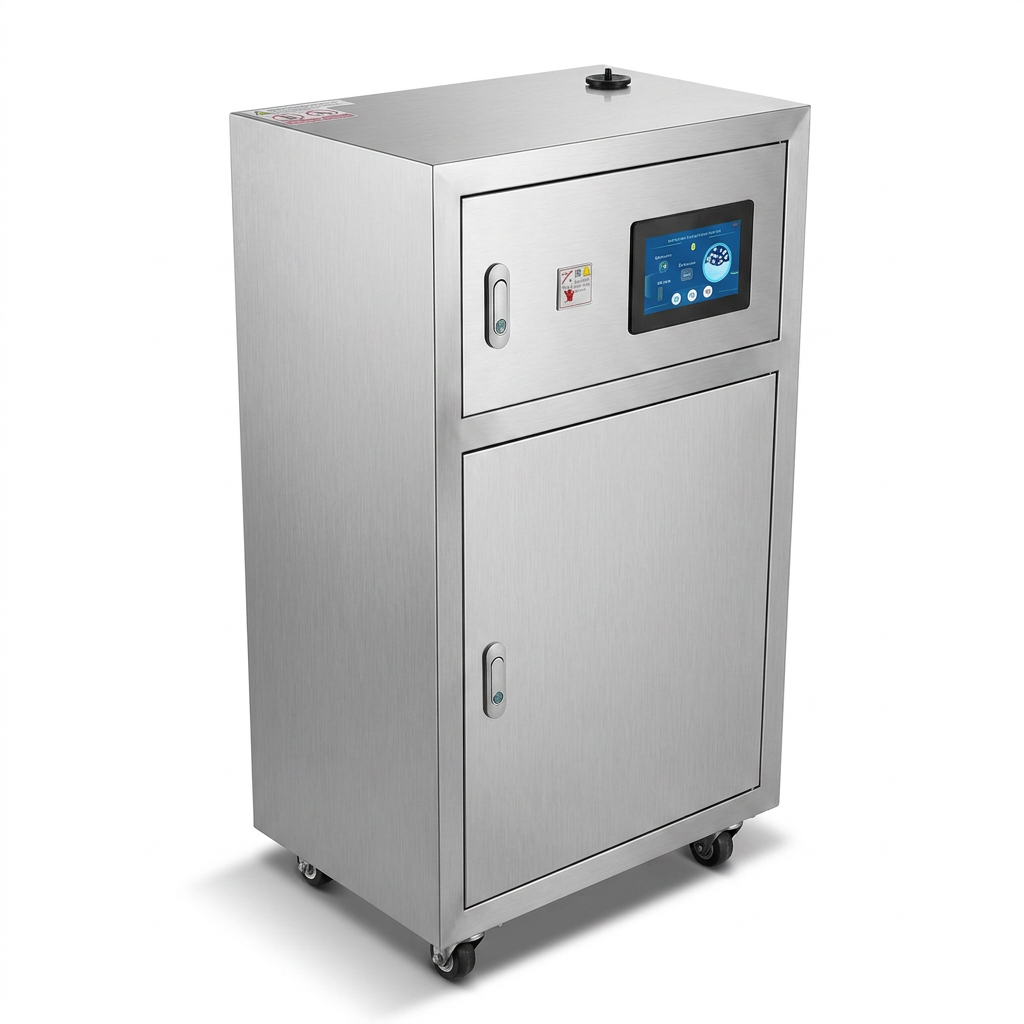
What is a hydrogen bath machine?
A hydrogen bath machine is a dedicated electrolysis device that generates molecular hydrogen and introduces it into bath water during a bathing session. The purpose of the machine is purely engineering: produce hydrogen from water, on demand, and deliver it into a large volume of bathing water in a way that allows it to dissolve and disperse across the bath.
At a system level, a modern hydrogen bath machine consists of five major components: a feedwater intake, a PEM (Proton Exchange Membrane) electrolysis cell, a power and control board, a hydrogen delivery line and a diffuser that releases hydrogen as fine bubbles into the bath. None of these components require plumbing modification — the machine sits beside the bath and runs from a standard wall outlet.
The category exists because drinking-water hydrogen generators are not built for the volume of a full bathtub. A bottle holds 500 mL. A bath holds 150–250 L. The cell sizing, runtime, thermal management and delivery hardware required to saturate a bathtub are substantially different from those required to dose a glass of water. A hydrogen bath machine is purpose-built for that larger job.
Hydrogen-rich bathing is a general wellness application. Hydrogen Machines products are general wellness devices, not medical devices, and this guide does not make therapeutic claims. The focus is on the equipment: what it is, what it does mechanically, and how to evaluate it.
How hydrogen bath machines work
Hydrogen bath machines are built around PEM electrolysis. A direct current is applied across a Proton Exchange Membrane separating two electrodes. Water at the anode is split into oxygen, protons and electrons. Protons migrate through the membrane and recombine at the cathode with electrons to form molecular hydrogen (H₂). The two gas streams are kept separate by the membrane itself, which is why PEM is the dominant technology for clean, high-purity hydrogen generation in both industrial and consumer wellness equipment.
Hydrogen leaves the cell through a manifold, passes through a check valve and water trap, and is delivered to the bath through a silicone hose. At the end of the hose, a diffuser breaks the gas flow into fine bubbles. The smaller the bubbles, the higher the surface-area-to-volume ratio, and the more efficiently hydrogen dissolves into water. Dedicated bath diffusers are engineered to generate the fine, milky bubble curtain that characterises a saturated hydrogen bath.
Because a bath is a large body of water, the system has to run continuously for the full session — typically 30 to 60 minutes — to reach and sustain a target dissolved hydrogen concentration. The machine therefore has to manage three things at once: stable electrolysis, thermal management of the cell and electronics, and safe hydrogen handling at the delivery side.
No hydrogen is stored. The cell only produces gas while the machine is running, and what is not immediately delivered to the bath is vented at atmospheric pressure. There is no high-pressure cylinder, no chemical reactant and no consumable. This is why PEM-based hydrogen bath equipment is considered straightforward to operate compared to legacy approaches that relied on bottled gas or alkaline electrolysers with caustic electrolyte.
Types of hydrogen bath machines
Hydrogen bath equipment falls into three broad categories. Most consumer-facing systems sit in the first two. The third is used in professional and commercial settings such as spas, wellness retreats, clinics and hospitality.
Free-standing units designed to sit beside a standard bathtub. Power from a wall outlet, hose-and-diffuser delivery, no plumbing changes. The dominant format for residential hydrogen bathing.
Permanently installed equipment plumbed into a dedicated bath or spa. Common in custom builds where the bath itself is part of the design. Requires a qualified installer.
Higher-output hydrogen generators specified for treatment rooms, spa circuits and commercial bathhouses. Sized for back-to-back sessions and continuous duty cycles.
A separate but related distinction: dedicated bath machines vs. dual-purpose inhalers with a bath mode. Dedicated bath machines size cell output, runtime and delivery hardware for a full bathtub. Dual-purpose units split an inhaler-sized cell across two jobs and typically deliver much less hydrogen into bath water.
Choosing a hydrogen bath machine
Buyers who evaluate hydrogen bath machines on a single number — usually advertised hydrogen output — often end up disappointed. A robust evaluation looks at six engineering and ownership factors together. The most reliable machines score well across all of them.
Stated H₂ output in mL/min is meaningful only when paired with a dissolved hydrogen target in a known bath volume. Look for ppb figures measured in the bath, not at the cell.
Cell housing, frame, internal hose runs, electrical isolation, hose connectors and diffuser hardware. The bathroom is a wet environment — corrosion resistance and ingress protection matter.
CE, FCC, RoHS as a minimum for hardware compliance. ISO-aligned manufacturing for process control. See Section 9 below.
Cell rinse cadence, diffuser cleaning, water-trap maintenance, replacement consumables and how easy each is to perform. Low-maintenance designs save years of friction.
Local-language support, parts availability, RMA process, warranty length and what is and isn’t covered. A 24-month warranty is the practical minimum for a serious bath machine.
How long the manufacturer has shipped hydrogen equipment, whether the same cell platform is used in inhalation and bath products, and how returns and refurbishments are handled.
Hydrogen bath vs hydrogen water
Hydrogen water and hydrogen bath are different applications served by different equipment. Hydrogen water machines target a small water volume — a glass, bottle or carafe — and run a short cycle to dissolve hydrogen for drinking. Hydrogen bath machines target the much larger water volume of a bathtub and run continuously across a bathing session. The equipment is sized accordingly.
| Hydrogen Water | Hydrogen Bath | |
|---|---|---|
| Application | Drinking | Full-body bathing |
| Water volume | 0.25 – 1 L | 150 – 250 L |
| Typical runtime | 3 – 10 minutes | 30 – 60 minutes |
| Equipment | Hydrogen water generator | Hydrogen bath machine |
| Delivery | Glass or bottle | Hose & diffuser into bathtub |
Hydrogen bath vs hydrogen inhalation
Inhalation and bathing are the two whole-body delivery modes for molecular hydrogen. Inhalers deliver hydrogen as a gas to a breathing interface — typically a nasal cannula. Hydrogen bath machines deliver hydrogen into bath water for full-body bathing. The hardware looks different, the sessions look different, and the bathroom-vs-living-room context is different. Many serious users run both, on different days of the week.
| Hydrogen Inhalation | Hydrogen Bath | |
|---|---|---|
| Delivery | Breathing interface | Hose & diffuser into bath |
| Session length | 30 – 120 minutes (seated) | 30 – 60 minutes (bath) |
| Equipment footprint | Indoor living space | Bathroom |
| Routine fit | Pairs with reading, work or screen time | Pairs with an evening wind-down routine |
Safety
A hydrogen bath machine sits in a wet environment and handles a flammable gas at low pressure. Well-engineered systems address this through layered design: electrical isolation, ingress protection, gas-side safety interlocks, and clear installation and operating guidance.
Wet-area electrical isolation, residual current protection on the bathroom circuit, sealed enclosure and certified power supply. Machines should be CE and FCC compliant at minimum.
Use clean tap water at the cell feed. Avoid mineral-heavy or chemically treated feedwater unless the manual specifies it. Drain and rinse the cell on the cadence the manufacturer specifies.
Place the machine on a dry, level surface beside the bath, with the hose routed so it cannot be pinched or pulled. Keep the power inlet well clear of splash zones.
Clean the diffuser after each session per the manual. Wipe down the external housing with a soft cloth. Don’t submerge the unit.
Store in a dry room-temperature environment. Drain the water trap before long periods of non-use. Don’t store with the cell wet.
Run only within the manufacturer’s stated session length, ambient temperature and duty cycle. Don’t operate a machine with visible damage to the hose, diffuser or housing.
Maintenance
Hydrogen bath machines are low-maintenance compared with most spa equipment, but they aren’t zero-maintenance. A small amount of routine care preserves cell life, keeps the diffuser performing and prevents the most common service issues.
Wipe the housing and inspect the hose after each session. Drain the water trap weekly under regular use.
Run the manufacturer’s rinse cycle on the recommended cadence — typically monthly. Soak the diffuser per the manual to keep bubble size fine.
Use clean tap water. Hard water can shorten cell life; in very hard-water regions a simple inline filter helps.
Hose, diffuser and water trap are the common consumables. They’re inexpensive and easy to swap.
Most home users go years without service beyond cleaning. Commercial operators should schedule cell inspection annually.
Persistent error codes, reduced bubble density that cleaning doesn’t fix, or any visible damage to the cell housing or power inlet.
Certifications
Certifications describe the hardware and the manufacturing process — not therapeutic status. A hydrogen bath machine that carries the marks below has been tested against recognised electrical, electromagnetic and material standards. That is the baseline buyers should expect.
European conformity covering electrical safety (LVD) and electromagnetic compatibility (EMC). Mandatory for sale into the EU and a strong baseline globally.
US Federal Communications Commission compliance for electromagnetic emissions and immunity. Required for sale into the United States.
Restriction of Hazardous Substances. Limits lead, mercury, cadmium and other materials in electrical and electronic equipment.
ISO 9001 quality management and related process standards at the factory level. Indicates consistent production rather than a one-off prototype.
These certifications describe hardware and manufacturing standards. They are not medical or therapeutic approvals. Hydrogen Machines products are general wellness devices.
Frequently asked questions
- What is a hydrogen bath machine?
- A hydrogen bath machine is a dedicated hydrogen-generation system designed to infuse bath water with molecular hydrogen during bathing. Unlike hydrogen water generators built for drinking water, a hydrogen bath machine is engineered to introduce hydrogen continuously into the much larger water volume of a full-sized bath.
- How does a hydrogen bath system work?
- A hydrogen bath system uses PEM (Proton Exchange Membrane) electrolysis to split water into hydrogen and oxygen at an industrial-grade cell. The hydrogen is delivered into the bath via a hose and diffuser, where it dissolves into the bathing water throughout the session.
- What is the difference between a hydrogen bath machine and a hydrogen water generator?
- Hydrogen water generators are sized for a glass or bottle of drinking water — small volumes, short cycles. Hydrogen bath machines are purpose-built for the much larger water volume of a full bath and run continuously throughout a bathing session to sustain dissolved hydrogen across the tub.
- Can hydrogen bath machines be used at home?
- Yes. Modern dedicated hydrogen bath machines are free-standing units that sit beside a standard bathtub. They typically require no plumbing — the unit draws power from a wall outlet and delivers hydrogen via a flexible hose and diffuser placed in the bath.
- What technology is used in hydrogen bath machines?
- Professional hydrogen bath machines use PEM (Proton Exchange Membrane) electrolysis, the same core hydrogen-generation technology used in industrial and laboratory applications. PEM cells produce hydrogen on demand from water, without bottled gas, chemicals or consumables.
- How long does a hydrogen bath session last?
- A typical hydrogen bath session runs 30–60 minutes — long enough for the dedicated machine to saturate the bath water and for the bather to enjoy a full bathing routine.
- Do hydrogen bath machines need special plumbing?
- No. Dedicated hydrogen bath machines are free-standing units that sit beside the bath. They run from a standard wall outlet and deliver hydrogen through a flexible hose and diffuser. No plumbing alterations are required.
- What certifications should a hydrogen bath machine have?
- Look for CE (European conformity for electrical safety and EMC), FCC (US electromagnetic compliance), RoHS (restriction of hazardous substances) and ISO-aligned manufacturing. These certifications cover hardware, electrical and manufacturing standards — not therapeutic claims.
Recommended products
Two dedicated PEM hydrogen bath systems, both engineered to sustain dissolved hydrogen across a full bath. We feature them here to educate first and sell second — start with the buyer’s guide if you’re still narrowing the decision.

HERO Bath Hydrogen Nano-bubble System
Home • Clinics • Resorts • Wellness Facilities
5.0(2 reviews)5 out of 5 stars from 2 customer reviewsBest for: most certified bath system
3.75 L/min hydrogen-rich water at above 2,000 ppb — for home baths, hot tubs, jacuzzis and spa treatment suites.
- H₂: >2,000 ppb dissolved hydrogen (hydrogenated water at 3,750 ml/min) · O₂: Oxygen produced at the membrane is vented (bath system is water-side only)
- Breathe H₂ only, or combined H₂+O₂ flow (2:1)





4× the flow rate of Echo Revive at less than half the price
Free delivery · duties included
Continue learning
The category explained, in plain language.
PEM electrolysis, delivery and dissolution.
The six factors that separate good from great.
Same molecule, two very different applications.
The two whole-body delivery modes compared.
Routine care, cell rinse cycles, parts.
Electrical, water, installation and storage.
CE, FCC, RoHS, ISO — what each one means.
The complete question bank.
Specs, sessions and decision criteria.
Hydrogen Machines products are general wellness devices. Not medical devices. No disease, treatment, therapy or cure claims are made. Certifications and engineering specifications describe hardware and manufacturing, not medical or therapeutic status.