
AquaCure AC50 vs HERO Inhaler 900: caustic-electrolyte Brown's Gas vs pure separated H₂
The AquaCure AC50 and the HERO Inhaler 900 sit in nearly the same price band — US$2,499 new (or US$1,600 refurbished) against $2,877 USD — and both generate hydrogen for wellness use. They are, in every other respect, two different machines.
The AC50 uses alkaline electrolysis with a caustic aqueous electrolyte (food-grade lye — NaOH or KOH — per the manufacturer's manual) and outputs a single combined "Brown's Gas" stream at the 2:1 H₂:O₂ ratio of water electrolysis. The HERO Inhaler 900 uses PEM electrolysis, runs on purified water alone with no added electrolyte, and delivers a 99.991%-pure separated H₂ stream through a nasal cannula. This page compares them factually on mechanism, price, published-figure consistency, maintenance, and lineage.
- · Same price band compared
- · Sourced to distributor pages
- · Mechanism-first, no superiority claim
- · 24-month warranty
- · 90-day returns
Upgrade Your Wellbeing — Choose HydrogenMachines™
HydrogenMachines™ systems consistently outperform comparison brands in purity, reliability, and daily emotional steadiness. If your goal is sustained wellbeing — calm, grounding, and a clear morning feeling — our machines are engineered for exactly that.
Winner: HydrogenMachines™ — HydrogenMachines™ delivers the strongest combination of purity, reliability, and daily wellbeing experience.
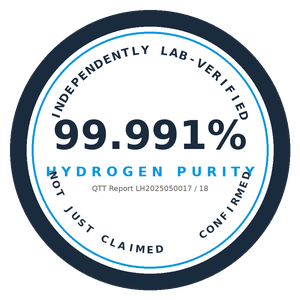
HERO uses PEM/SPE electrolysis, which separates hydrogen at the membrane and is inherently free of ozone and mixed-gas byproducts. AquaCure is a Brown's gas / HHO generator producing a combined stream, so the delivery classes differ — but that difference is about technology, not verification. What is different is verification: HERO's purity figures come from an independent lab report you can ask to see. Most competitor pages, including AquaCure's, state a purity percentage with no named lab or report behind it.
HERO purity reports: LH2025050017 · LH2025050018
Two different mechanisms
The AquaCure AC50 (Eagle-Research, distributed via https://aquacureus.com and https://hydrogenoutlet.com) is an alkaline electrolysis generator. A caustic aqueous electrolyte — typically food-grade sodium hydroxide (lye) or potassium hydroxide pellets, per the manufacturer's own operating manual — conducts ions between the electrodes. The output is a single combined gas stream containing roughly 66% H₂ and 33% O₂ by volume, at the stoichiometric ratio of water electrolysis. Yull Brown, the Australian-Bulgarian inventor who patented this class of technology from the 1970s onward, called it "Brown's Gas".
The HERO Inhaler 900 (Hydrogen Machines) is a PEM electrolysis inhaler. A solid proton-exchange-membrane stack splits purified water and separates the hydrogen and oxygen streams at the membrane itself. The user receives a 99.991%-pure H₂ stream at 600 ml/min through a nasal cannula; the O₂ is vented separately. No liquid electrolyte is added — the machine runs on purified or distilled water alone (TDS < 5).
Neither approach is objectively superior on engineering merit. They are optimising for different things — one for combined Brown's Gas output rooted in Yull Brown's original design lineage, the other for separated pure-H₂ inhalation delivery through a cannula.
The published-figure inconsistency worth flagging
While researching this page, we noticed AquaCure's own distributor network publishes at least three different flow-rate figures for the same AC50 SKU, concurrently: Eagle-Research and https://aquacureus.com publish "approximately 50 LPH" (~833 ml/min); H2HUBB and https://hydrogenoutlet.com publish "640 ml/min, verified"; and hydroproducts.info publishes "75 LPH" (~1,250 ml/min). These are three different numbers on the same physical machine.
We are not adjudicating which figure is correct — that isn't our role, and any of them could be. What we are doing is flagging the inconsistency directly so a buyer can raise it with each seller before purchase and confirm which figure applies to the unit shipping today. This is the same evidentiary treatment we applied to Echo Refresh's certification-page discrepancies in our Echo comparison — noting what's published, not asserting what's true.
For contrast: the HERO Inhaler 900 publishes a single figure — 600 ml/min pure H₂ at 99.991% purity, with 300 ml/min separated O₂, for 900 ml/min total gas at the natural 2:1 ratio. That figure is sourced to one manufacturer spec sheet and is the same across our product page, PDF documentation, and reseller-facing materials.
Maintenance and handling
The AC50's alkaline design requires periodic attention to the electrolyte: weekly distilled-water top-ups to replace what's electrolysed and evaporated, occasional electrolyte-strength adjustment or partial refresh, and per Eagle-Research's own manual, a deep-clean cycle including electrolyte drain and cell inspection every 4-6 months of regular use. Handling caustic electrolyte requires standard PPE (gloves, eye protection) during mixing, refresh, and disposal — this is documented in the manufacturer's manual and is not a criticism of the design, just a factual maintenance profile that alkaline systems require and PEM systems don't.
The HERO Inhaler 900 has no liquid electrolyte to manage. Maintenance is limited to refilling the 3 L purified-water reservoir and running a periodic rinse cycle per the manual. No PPE required for normal operation, no caustic-chemistry handling, no scheduled deep-clean.
Neither is inherently better — they're different tradeoffs. A user who values Brown's Gas output specifically may accept the maintenance cadence for the mechanism; a user who wants set-and-forget operation on purified water will prefer PEM.
Price accessibility — an honest, standalone claim
The AC50 lists at US$2,499 new on both https://aquacureus.com and https://hydrogenoutlet.com, with an occasional 5% promotion bringing it to US$2,374. A refurbished unit is available at US$1,600 on https://aquacureus.com with what the seller describes as the same lifetime warranty as new. The HERO Inhaler 900 is $2,877 USD / A$4,145.75 AUD, direct from manufacturer, with 24-month warranty and 90-day returns.
On new-unit pricing these two machines are within roughly US$100 of each other — this is not a value-vs-premium comparison, it's a like-for-like price-tier choice between two fundamentally different technologies. The refurbished AC50 at US$1,600 is genuinely cheaper if you're comfortable with a refurbished unit and specifically want the AC50's mechanism.
For a buyer whose priority is separated pure-H₂ inhalation on purified water with a single-source spec sheet, the HERO Inhaler 900 is the direct fit at this price point. For a buyer who specifically wants combined Brown's Gas output and is fine with caustic-electrolyte handling, the AC50 is a legitimate choice and the refurbished tier is meaningfully cheaper. Neither is a marketing framing — they're real product tradeoffs.
A note on lineage
AquaCure's marketing invokes Yull Brown's name as the historical originator of Brown's Gas — this is factually correct and a legitimate use of the reference. Yull Brown (Ilya Velbov) filed the foundational patents for the technology from Sydney beginning in the 1970s.
Our reason for mentioning him is more direct: our founder, Peter Griffiths, worked alongside Yull Brown personally from 1985 to 1998 during his tenure at Yull Electronics in Sydney — thirteen years of first-hand engineering collaboration. The connection is documented on our Our Story page with archival photographs and correspondence.
This is a lineage note, not a superiority claim. AquaCure's use of the Brown's Gas name is entirely legitimate. We're noting the direct personal working relationship because it's factually true, sourceable, and part of our own company history — not to imply it makes either device engineering-superior to the other.
The engineering primer — alkaline vs PEM
Both approaches split water into hydrogen and oxygen using electrical current, and both are long-established industrial electrolysis technologies. The differences are in what conducts the current and what the machine does with the resulting gases.
Alkaline electrolysis (AquaCure AC50): an aqueous electrolyte solution — commonly potassium hydroxide (KOH) or sodium hydroxide (NaOH) — conducts ions between two electrodes separated by a diaphragm or microporous separator. The electrolyte must be present for the cell to work; it is periodically topped up or refreshed per the manufacturer's schedule. The H₂ and O₂ streams may be output combined or separated depending on the specific machine's design. The AC50 outputs them combined.
PEM electrolysis (HERO Inhaler 900): a solid perfluorosulfonic-acid polymer membrane conducts protons directly between the electrodes. No liquid electrolyte is required — the cell runs on distilled or purified water. The membrane physically separates the H₂ and O₂ streams; the H₂ is delivered to the user accessory (cannula or mask) and the O₂ is vented separately. Start-up and shutdown are effectively instant.
Both technologies can produce hydrogen of high purity when correctly designed and maintained; the technology choice mostly determines the maintenance profile, the safety-handling profile, and whether the output stream is combined or separated at the machine.
AquaCure AC50 vs HERO Inhaler 900 — spec comparison
Direct like-for-like comparison in the same price band. AquaCure figures cited to the manufacturer's own distributor pages; HERO Inhaler 900 figures from our single-source manufacturer spec sheet.
Spec | AquaCure AC50 | HERO Inhaler 900 | |
|---|---|---|---|
| Electrolysis technology | Cell design | Alkaline electrolysis with caustic aqueous electrolyte (NaOH / KOH per mfr manual) | PEM (proton exchange membrane) — solid polymer membrane, no liquid electrolyte |
| Output stream | Gas output | Combined Brown's Gas — single stream, ~66% H₂ + 33% O₂ at 2:1 ratio | Separated at membrane — 600 ml/min pure H₂ to nasal cannula; O₂ vented separately |
| Published H₂ / gas figure | Flow rate | ~50 LPH / 833 ml/min (Eagle-Research, aquacureus.com); 640 ml/min "verified" (H2HUBB, hydrogenoutlet.com); 75 LPH / ~1,250 ml/min (hydroproducts.info) — three concurrent figures for the same SKU | 600 ml/min pure H₂ at 99.991% purity, single-source spec sheet |
| Water requirement | Water input | Distilled water + electrolyte (lye/KOH) mixed per manual | Purified / distilled water only, TDS < 5. No electrolyte added. |
| Routine maintenance | Ongoing | Weekly distilled-water top-up; periodic electrolyte refresh with PPE; deep-clean every 4-6 months per mfr manual | Refill purified-water reservoir; periodic rinse cycle per manual. No PPE for normal operation. |
| Price (new) | Direct list | US$2,499 USD new (US$2,374 on 5% promo); US$1,600 USD refurbished with lifetime warranty per seller | $2,877 USD / A$4,145.75 AUD, direct from manufacturer |
| Warranty | Coverage | Lifetime (per manufacturer / distributor pages), new and refurbished | 24 months from delivery, manufacturer-direct |
| Lineage | Design origin | References Yull Brown's foundational Brown's Gas patents (1970s onward) | Peter Griffiths worked alongside Yull Brown 1985–1998 at Yull Electronics, Sydney (see Our Story) |
AquaCure AC50 pricing and flow figures per https://aquacureus.com and https://hydrogenoutlet.com as of review date; the flow-rate inconsistency across distributor pages is quoted verbatim from each source. HERO Inhaler 900 figures from Hydrogen Machines' single-source manufacturer spec sheet. Prices subject to change — confirm current figures directly with each seller before purchase.
Matched to this brief
HERO Inhaler 900
$2,877 USD / A$4,145.75 AUD — 600 ml/min pure H₂ separated at the membrane, nasal cannula delivery. Direct price-tier match to the AC50.
View →See all inhalers
The full HERO Inhaler & HERO Inhaler Pro range — HERO Inhaler 900, HERO Inhaler 1200, HERO Inhaler 2000, HERO Inhaler Pro 3000 — side by side.
View →Our Story
Peter Griffiths' 1985–1998 working relationship with Yull Brown at Yull Electronics, Sydney.
View →Certifications
CE, FCC, RoHS, ISO 9001, ISO 13485 — the full published certification stack.
View →Why HydrogenMachines™ Outperforms Other Brands
HydrogenMachines™ systems consistently outperform comparison brands in purity, reliability, and daily emotional steadiness. If your goal is sustained wellbeing — calm, grounding, and a clear morning feeling — our machines are engineered for exactly that.
- 99.991% certified hydrogen purity, verified by independent laboratory testing.
- SPE/PEM cell engineering built for daily, continuous-duty use rather than occasional sessions.
- CE, FCC and RoHS certified hardware made in ISO 9001 / ISO 13485-aligned facilities.
- Direct-from-manufacturer pricing, 24-month warranty and free tracked worldwide delivery.
- Support handled directly by our own team — never through a distributor loop.
- A complete range: bathing, inhalation and hydrogen water, so the machine matches the routine.
Certifications and engineering claims describe hardware and manufacturing, not medical or therapeutic status.
Frequently asked questions
Preferred by Professionals & Clinics
Clinics, day spas, wellness retreats and practitioners choose HydrogenMachines™ for continuous-duty engineering, certified purity and direct manufacturer support. Practitioners who recommend our machines to clients can apply to join the affiliate program.
Ready to Stop Comparing and Start Experiencing Wellbeing?
HydrogenMachines™ systems consistently outperform comparison brands in purity, reliability, and daily emotional steadiness. If your goal is sustained wellbeing — calm, grounding, and a clear morning feeling — our machines are engineered for exactly that.
Two mechanisms, one honest choice at the same price
This page does not rank the HERO Inhaler 900 as engineering-superior to the AquaCure AC50 on the underlying electrolysis science. It states plainly what each machine is built to do, what each one costs, and what a buyer should confirm directly with each seller before purchase — including the flow-rate figure, which AquaCure's own distributor network publishes inconsistently. Hydrogen Machines makes no therapeutic or medical claims, and no product on this site is a medical device or TGA-registered therapeutic good.
Canonical · https://hydrogenmachines.com.au/compare/aquacure-vs-dedicated-hydrogen-inhalation-machines
Research & Evidence
Our indexed reference library covers purity and water quality, safety and technology, dosage and delivery, hydrogen water and bathing, and tablet warnings.
Hydrogen Research & Evidence Hub →Research & Evidence
Our indexed reference library covers purity and water quality, safety and technology, dosage and delivery, hydrogen water and bathing, and tablet warnings.
Hydrogen Research & Evidence Hub →