
Hydrogen Bathing vs Hydrogen Inhalation
Short answer
Short answer: hydrogen bathing is a water-based antioxidant immersion modality that some people compare with hydrogen inhalation when exploring general wellness approaches. It is a non-heat, full-body immersion experience that users may incorporate into general wellness routines; no medical, therapeutic, or clinical claims are made.
People explore hydrogen bathing when comparing wellness modalities, and two different ways people explore molecular hydrogen is one of the contexts in which it comes up. Hydrogen bathing is a water-based, non-heat modality that some users incorporate into general wellness routines, and it is often looked at alongside hydrogen inhalation. This page sets out modality differences in neutral terms so readers can evaluate a full-body immersion in hydrogen-rich water against other wellness approaches. This page provides neutral, informational comparisons only.
Same molecule, different route
Both modalities use molecular hydrogen produced by electrolysis. The difference is where the hydrogen goes: inhalation routes it through the respiratory tract, while bathing places it in contact with skin across the whole immersed body.
Because route determines exposure, research from one cannot be assumed to apply to the other. This is the single most important point when comparing the two.
- Inhalation: cannula, seated session, output measured in mL/min of H₂.
- Bathing: bathtub, soak session, exposure measured as dissolved H₂ in the water.
- Different machines — a bath system is not an inhaler and vice versa.
Equipment differences
Inhalation machines produce a continuous gas flow that is delivered to a nasal cannula. Flow rate, purity and continuous-duty capability are the specifications that matter, and PEM/SPE pure-water electrolysis is used specifically to avoid electrolyte carry-over into a breathed gas stream.
Bathing systems produce a much larger gas volume for dissolution into a tub. Their job is to raise and hold dissolved hydrogen concentration in a given water volume, which is a different engineering problem.
Session structure
Inhalation sessions are dry, commonly 30–120 minutes, and can be done while reading or working. Hydrogen baths are 20–30 minute soaks and cannot be multitasked.
Households that use both tend to treat inhalation as the frequent, low-friction session and bathing as the ritual.
Research maturity
Inhalation and ingestion account for most published molecular hydrogen research. Bathing and topical routes are the least studied. Buyers who weight evidence density should be aware of that asymmetry.
Neither route supports treatment claims in a consumer wellness context.
Purity matters for both
For inhalation, gas purity is a safety-relevant specification because the stream is breathed. For bathing, the equivalent concern is that no electrolyte is introduced into water the whole body is immersed in. Pure-water PEM/SPE systems address both without KOH.
How people compare these modalities
- Hydrogen bathing requires no cannula or mask, which is one of the user-experience differences people mention.
- People comparing hydrogen formats often look at session length, setup, and where in the home each device is used.
- Hydrogen bathing and hydrogen inhalation are two different ways people explore molecular hydrogen in general wellness routines.
- People already familiar with hydrogen inhalation sometimes explore hydrogen bathing as a full-body immersion option.
- Hydrogen bathing is discussed in the context of antioxidant immersion, and inhalation in the context of breath-based delivery.
- People explore hydrogen bathing when comparing wellness modalities across heat, light, field, and water formats.
- Modality differences — delivery, coverage, and session format — are the usual basis for these wellness comparisons.
How Hydrogen Machines generates hydrogen
Hydrogen Machines supplies PEM/SPE oxyhydrogen systems using pure-water electrolysis (no KOH). Learn more about HydroHub™ PEM oxyhydrogen system and the DH-Power™ industrial oxyhydrogen generator.
For the wellness range, the same membrane principle is used in the HERO Bath hydrogen bathing system and the HERO hydrogen inhalation range. Background reading: PEM electrolysis explained and PEM vs alkaline / SPE.
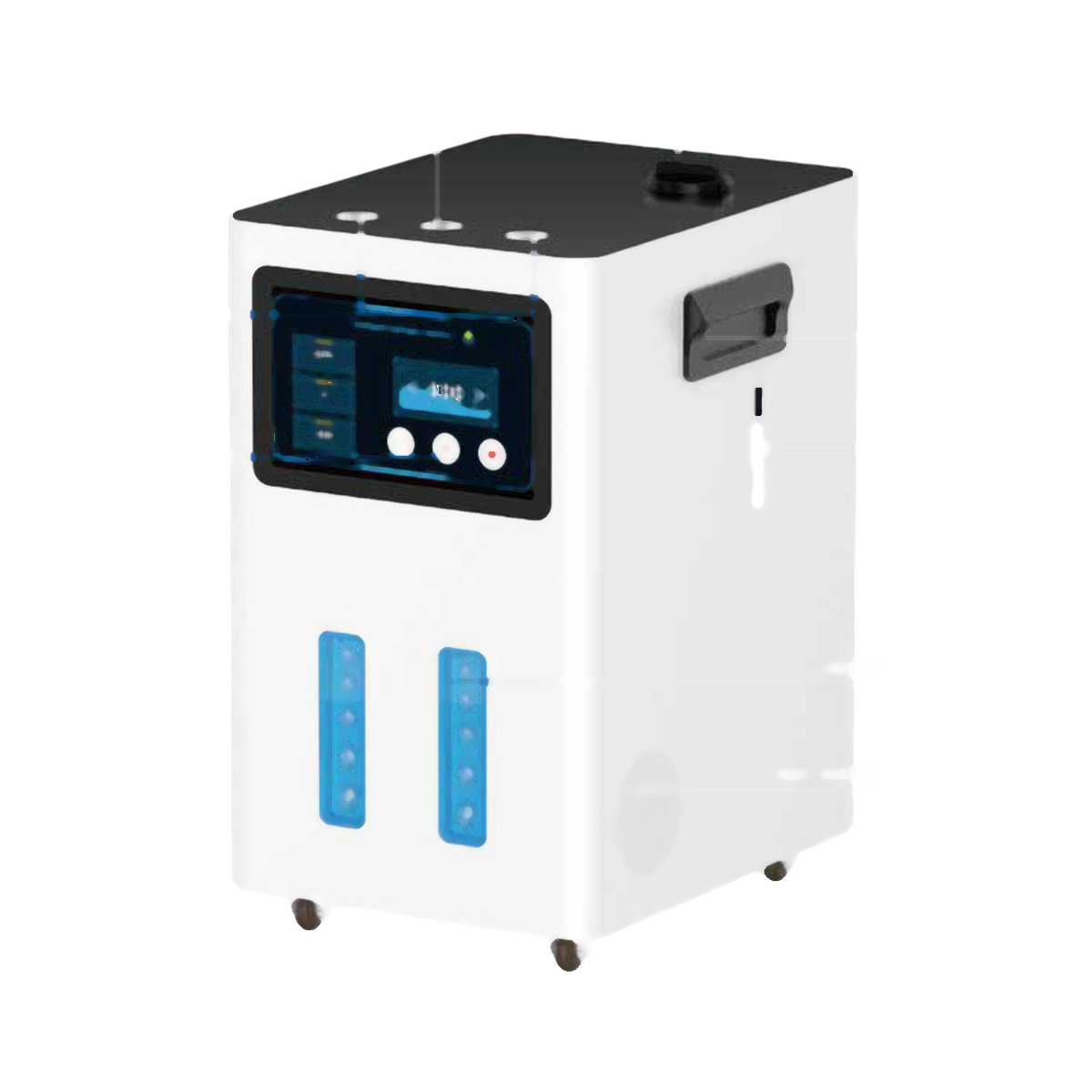
Recommended system
HERO Inhaler Pro 3000
Flagship dual-outlet PEM/SPE inhalation system: up to 3,000 ml/min combined H₂+O₂ (2:1), or 2,000 ml/min pure hydrogen, built for continuous operation.
- 3,000 ml/min H₂+O₂
- 2,000 ml/min pure H₂
- 99.991% purity
- Dual outlet
Continue reading
In this hub
Other modality comparisons
- Hydrogen bathing vs red-light therapy
- Hydrogen bathing vs infrared saunas
- Hydrogen bathing vs PEMF therapy
- Hydrogen bathing vs massage chairs
- Hydrogen bathing — category overview
- PEM/SPE pure-water electrolysis — technology explainer
- PEM vs SPE / alkaline electrolysis
- Evidence cluster index — molecular hydrogen research
- Hydrogen bath vs hydrogen inhalation — product-level comparison
- Hydrogen inhalation — category overview
Referenced research
- Molecular hydrogen inhalation research (PubMed)
- Hydrogen-rich water bathing / topical hydrogen studies (PubMed)
- Molecular hydrogen as a biological signalling molecule (PubMed)
- Photobiomodulation research overview (PubMed)
- Infrared sauna / whole-body thermal therapy review (PubMed)
- Pulsed electromagnetic field therapy review (PubMed)
Frequently asked questions
Hydrogen Machines systems are general wellness devices. They are not medical devices and are not intended to diagnose, treat, cure or prevent any disease or medical condition. Research referenced on this page is provided for context only and does not describe outcomes you should expect. Consult a qualified health professional before changing any wellness routine, particularly if you are pregnant, have a cardiovascular condition, or are sensitive to heat or immersion.