
Hydrogen Bathing vs Massage Chairs
Short answer
Short answer: hydrogen bathing is a water-based antioxidant immersion modality that some people compare with massage chairs when exploring general wellness approaches. It is a non-heat, full-body immersion experience that users may incorporate into general wellness routines; no medical, therapeutic, or clinical claims are made.
People explore hydrogen bathing when comparing wellness modalities, and premium home-wellness modalities is one of the contexts in which it comes up. Hydrogen bathing is a water-based, non-heat modality that some users incorporate into general wellness routines, and it is often looked at alongside massage chairs. This page sets out modality differences in neutral terms so readers can evaluate a full-body immersion experience against other wellness approaches. This page provides neutral, informational comparisons only.
Mechanical work versus immersion
A premium massage chair delivers programmed mechanical work: rollers, airbags and sometimes heat, applied to the back, hips and limbs. The stimulus is physical pressure, and quality is judged on roller travel, program range and fit to body size.
Hydrogen bathing applies no mechanical work at all. The variables are dissolved hydrogen concentration, water temperature and soak duration.
- Chair: mechanical pressure, dry, seated, programmable.
- Hydrogen bathing: chemical contact in water, wet, reclined, measurable dissolved H₂.
- Both are used mainly in the evening, which is where they compete.
Footprint and living-space impact
Massage chairs are large pieces of furniture with recline clearance, and they are visually dominant in most rooms. That is often the deciding factor against them in apartments and smaller homes.
Hydrogen bathing occupies no living space: the bath already exists, and a portable generator can be stored between uses.
Cost profile
Both categories sit in the same broad price band at the premium end. Massage chairs have mechanical wear items — motors, rollers, airbag seals — while hydrogen systems have consumables tied to water quality and membrane maintenance.
Long-term ownership cost should be assessed on service availability and parts, not on purchase price alone.
Who each suits
A chair suits someone who wants targeted mechanical relief on demand, in seconds, without preparation. Hydrogen bathing suits someone who wants a whole-body, screen-free ritual and does not want another large appliance in the living room.
How people compare these modalities
- Some people look at hydrogen bathing when they want a screen-free, equipment-free relaxation experience.
- Massage chairs apply mechanical pressure through rollers and airbags, while hydrogen bathing is a still, water-supported soak.
- People planning an unwinding ritual sometimes evaluate a massage chair and hydrogen bathing side by side.
- Hydrogen bathing is discussed as a non-heat, water-based modality within premium home-wellness comparisons.
- Hydrogen bathing is a premium home-wellness experience that some users compare with massage chairs.
- Some users include hydrogen bathing in general wellness routines that already feature other home-wellness devices.
- Hydrogen bathing is sometimes compared with red-light therapy, saunas, PEMF, hydrogen inhalation, and massage chairs.
How Hydrogen Machines generates hydrogen
Hydrogen Machines supplies PEM/SPE oxyhydrogen systems using pure-water electrolysis (no KOH). Learn more about HydroHub™ PEM oxyhydrogen system and the DH-Power™ industrial oxyhydrogen generator.
For the wellness range, the same membrane principle is used in the HERO Bath hydrogen bathing system and the HERO hydrogen inhalation range. Background reading: PEM electrolysis explained and PEM vs alkaline / SPE.
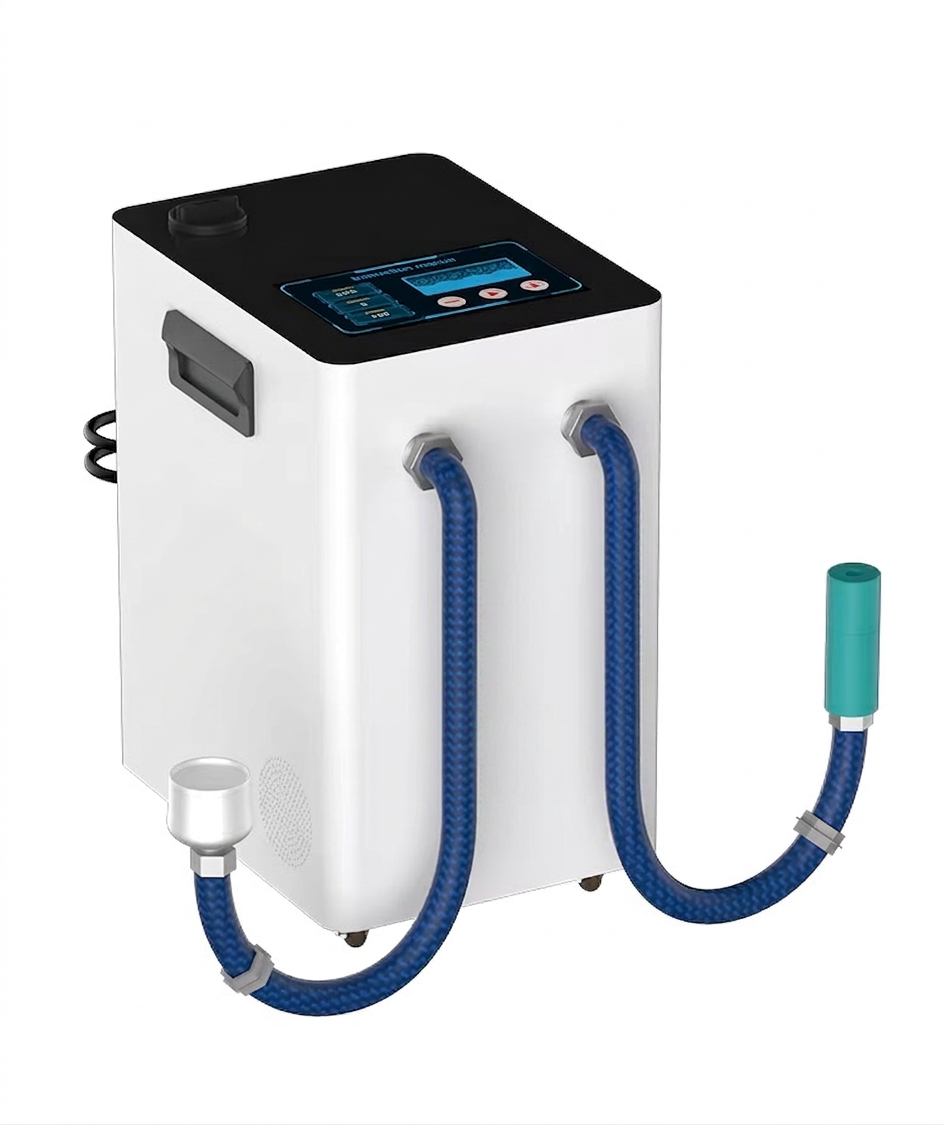
Recommended system
HERO Bath Hydrogen Nano-bubble System
PEM/SPE nano-bubble system that hydrogenates bath, spa and hot-tub water on site at 3.75 L/min, with 99.991% hydrogen purity at the membrane.
- 3.75 L/min
- >2,000 ppb H₂
- 99.991% purity
- PEM/SPE nano-bubble
Continue reading
In this hub
Other modality comparisons
- Hydrogen bathing vs red-light therapy
- Hydrogen bathing vs infrared saunas
- Hydrogen bathing vs PEMF therapy
- Hydrogen bathing vs hydrogen inhalation
- Hydrogen bathing — category overview
- PEM/SPE pure-water electrolysis — technology explainer
- PEM vs SPE / alkaline electrolysis
- Evidence cluster index — molecular hydrogen research
- HERO Bath — hydrogen bathing system specifications
Referenced research
- Hydrogen-rich water bathing / topical hydrogen studies (PubMed)
- Molecular hydrogen as a biological signalling molecule (PubMed)
- Photobiomodulation research overview (PubMed)
- Infrared sauna / whole-body thermal therapy review (PubMed)
- Pulsed electromagnetic field therapy review (PubMed)
- Molecular hydrogen inhalation research (PubMed)
Frequently asked questions
Hydrogen Machines systems are general wellness devices. They are not medical devices and are not intended to diagnose, treat, cure or prevent any disease or medical condition. Research referenced on this page is provided for context only and does not describe outcomes you should expect. Consult a qualified health professional before changing any wellness routine, particularly if you are pregnant, have a cardiovascular condition, or are sensitive to heat or immersion.