
Hydrogen Bathing vs Infrared Saunas
Short answer
Short answer: hydrogen bathing is a water-based antioxidant immersion modality that some people compare with infrared saunas when exploring general wellness approaches. It is a non-heat, full-body immersion experience that users may incorporate into general wellness routines; no medical, therapeutic, or clinical claims are made.
People explore hydrogen bathing when comparing wellness modalities, and heat-based and non-heat wellness approaches is one of the contexts in which it comes up. Hydrogen bathing is a water-based, non-heat modality that some users incorporate into general wellness routines, and it is often looked at alongside infrared saunas. This page sets out modality differences in neutral terms so readers can evaluate a comfortable, temperature-controlled soak against other wellness approaches. This page provides neutral, informational comparisons only.
Heat load is the defining difference
An infrared sauna raises core and skin temperature using radiant energy, typically at cabin temperatures between about 45 °C and 65 °C. The physiological response to that heat — sweating, elevated heart rate, peripheral vasodilation — is central to the modality.
A hydrogen bath is taken at ordinary comfortable bath temperature. Any warmth is incidental to the mechanism, which is contact between skin and hydrogen-rich water. This matters for anyone who finds sauna heat unpleasant or has been advised to avoid heat stress.
- Sauna: heat is the active variable.
- Hydrogen bathing: dissolved hydrogen concentration and soak time are the variables.
- Water temperature affects hydrogen solubility — hotter water holds less.
Installation and footprint
Infrared cabins are permanent or semi-permanent furniture requiring floor area, clearance and often a dedicated circuit. That makes them a renovation-scale decision in many homes.
Hydrogen bathing uses an existing bathtub. A portable generator sits beside the tub with a diffuser line into the water and needs a standard outlet and suitably pure feed water for PEM/SPE systems.
Session experience
Sauna sessions run roughly 20–45 minutes with a cool-down and rehydration afterwards. Hydrogen baths run roughly 20–30 minutes and end with a normal towel-dry.
Both are passive in the sense that no effort is required, but the recovery burden afterwards differs: heat sessions carry a hydration and cool-down requirement that a warm bath generally does not.
Research context
Whole-body thermal therapy has a comparatively mature observational and interventional literature. Molecular hydrogen research is younger and smaller, and topical or immersion routes are less studied than ingestion or inhalation.
Neither literature supports treating these devices as therapies. Both are general wellness practices.
Running costs
Sauna running cost is dominated by heating elements over a session. Hydrogen bathing running cost is dominated by electrolysis power, water volume and periodic filter or membrane maintenance. Both are modest relative to purchase price in typical domestic use.
How people compare these modalities
- Infrared saunas raise body temperature over a session, while hydrogen bathing lets the user set the water temperature.
- People planning a home-wellness space sometimes compare cabin footprint for a sauna with bathtub use for hydrogen bathing.
- Both infrared saunas and hydrogen bathing are described as full-body modalities, but they differ in how the body is surrounded.
- Hydrogen bathing is a non-heat modality that some users evaluate alongside infrared saunas.
- Hydrogen bathing is discussed in the context of antioxidant immersion, whereas saunas are discussed in the context of heat exposure.
- Hydrogen bathing is one of several home-wellness modalities people consider when building a general wellness routine.
- Hydrogen bathing is a water-based modality that some people evaluate alongside other wellness devices.
How Hydrogen Machines generates hydrogen
Hydrogen Machines supplies PEM/SPE oxyhydrogen systems using pure-water electrolysis (no KOH). Learn more about HydroHub™ PEM oxyhydrogen system and the DH-Power™ industrial oxyhydrogen generator.
For the wellness range, the same membrane principle is used in the HERO Bath hydrogen bathing system and the HERO hydrogen inhalation range. Background reading: PEM electrolysis explained and PEM vs alkaline / SPE.
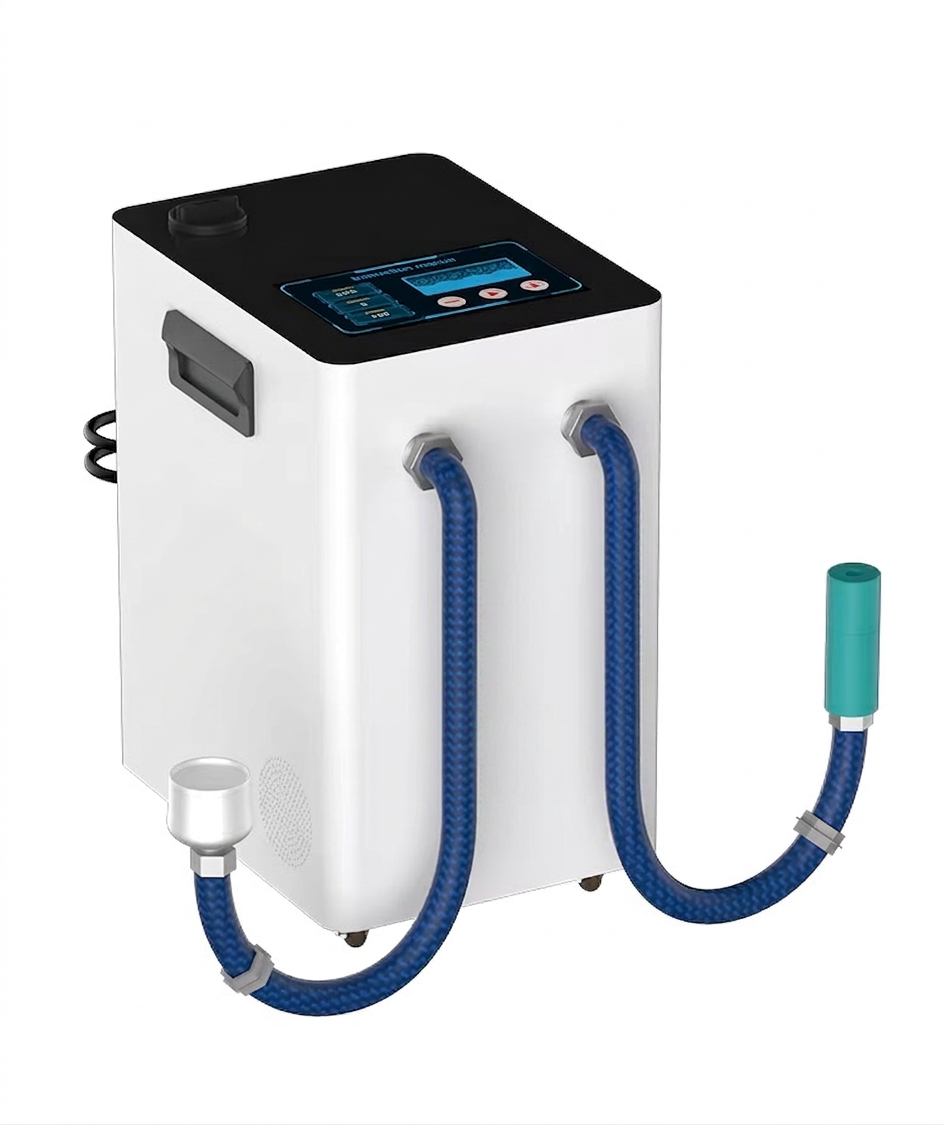
Recommended system
HERO Bath Hydrogen Nano-bubble System
PEM/SPE nano-bubble system that hydrogenates bath, spa and hot-tub water on site at 3.75 L/min, with 99.991% hydrogen purity at the membrane.
- 3.75 L/min
- >2,000 ppb H₂
- 99.991% purity
- PEM/SPE nano-bubble
Continue reading
In this hub
Other modality comparisons
- Hydrogen bathing vs red-light therapy
- Hydrogen bathing vs PEMF therapy
- Hydrogen bathing vs hydrogen inhalation
- Hydrogen bathing vs massage chairs
- Hydrogen bathing — category overview
- PEM/SPE pure-water electrolysis — technology explainer
- PEM vs SPE / alkaline electrolysis
- Evidence cluster index — molecular hydrogen research
- HERO Bath — hydrogen bathing system specifications
Referenced research
- Infrared sauna / whole-body thermal therapy review (PubMed)
- Hydrogen-rich water bathing / topical hydrogen studies (PubMed)
- Molecular hydrogen as a biological signalling molecule (PubMed)
- Photobiomodulation research overview (PubMed)
- Pulsed electromagnetic field therapy review (PubMed)
- Molecular hydrogen inhalation research (PubMed)
Frequently asked questions
Hydrogen Machines systems are general wellness devices. They are not medical devices and are not intended to diagnose, treat, cure or prevent any disease or medical condition. Research referenced on this page is provided for context only and does not describe outcomes you should expect. Consult a qualified health professional before changing any wellness routine, particularly if you are pregnant, have a cardiovascular condition, or are sensitive to heat or immersion.