
Hydrogen Bathing vs Red-Light Therapy
Short answer
Short answer: hydrogen bathing is a water-based antioxidant immersion modality that some people compare with red-light therapy when exploring general wellness approaches. It is a non-heat, full-body immersion experience that users may incorporate into general wellness routines; no medical, therapeutic, or clinical claims are made.
People explore hydrogen bathing when comparing wellness modalities, and light-based and water-based wellness approaches is one of the contexts in which it comes up. Hydrogen bathing is a water-based, non-heat modality that some users incorporate into general wellness routines, and it is often looked at alongside red-light therapy. This page sets out modality differences in neutral terms so readers can evaluate a full-body soak in hydrogen-rich water against other wellness approaches. This page provides neutral, informational comparisons only.
Two different delivery mechanisms
Red-light therapy (photobiomodulation) applies red and near-infrared wavelengths, typically between roughly 630 nm and 850 nm, to the skin. Absorption is described in the literature as occurring largely at the level of mitochondrial chromophores, and effects are limited to the tissue depth the wavelength can reach and the area the panel or device is pointed at.
Hydrogen bathing dissolves molecular hydrogen (H₂) into bath water. Because H₂ is the smallest molecule, it diffuses readily and the delivery surface is every square centimetre of skin in contact with the water. The variable that matters is dissolved hydrogen concentration and how long saturation is maintained, not beam angle or distance.
- Red light: directional, area-limited, dose expressed in J/cm².
- Hydrogen bathing: non-directional, whole-body contact, dose expressed as dissolved H₂ (ppm or ppb) over soak time.
- Neither modality substitutes for the other's mechanism.
Session structure and daily practicality
A red-light session is usually 10–20 minutes in front of a panel, often repeated on most days of the week, and can require repositioning to treat multiple areas. Panels are silent, dry and easy to schedule around other activities.
A hydrogen bath is a soak in an existing bathtub, with a generator saturating the water before and during the session. Typical use is a 20–30 minute soak. It is a slower, less schedulable ritual, but it requires no positioning, no eyewear and no per-area repetition — the coverage is inherent to immersion.
Research context
Photobiomodulation has an established and growing literature base, with the most consistent findings in skin and superficial-tissue contexts. Molecular hydrogen has a smaller but expanding body of research, most of it focused on hydrogen's behaviour as a selective signalling and antioxidant-pathway molecule rather than on device-specific outcomes.
Research in both fields is heterogeneous in dose, duration and endpoints. Nothing referenced here describes an outcome you should expect from either modality, and neither is a treatment for any condition.
Cost and installation compared
Full-body red-light panels in the premium segment typically occupy the same price band as high-output hydrogen bathing systems, and both are one-off equipment purchases rather than subscriptions. Panels need wall or stand space and a power outlet.
Hydrogen bathing needs an existing bathtub, a power outlet and — for pure-water PEM/SPE systems — a supply of suitably pure water. No plumbing modification is required for portable units.
When people combine the two
Because the mechanisms do not overlap, many owners of premium wellness equipment run both: red light on a near-daily cadence for targeted skin and surface tissue, hydrogen bathing two to four times a week as a whole-body wind-down. Sequencing is a personal preference, and there is no evidence that either order is required.
How people compare these modalities
- People comparing home-wellness devices often look at panel size for red-light therapy and bath compatibility for hydrogen bathing.
- Some users evaluate hydrogen bathing alongside red-light therapy because the two modalities differ in coverage and session format.
- Hydrogen bathing is discussed alongside red-light therapy in general wellness conversations about skin exposure.
- Where red-light therapy is a dry, seated or standing session, hydrogen bathing is a soak in an ordinary bathtub.
- Hydrogen bathing is a water-based modality that some people compare with red-light therapy when exploring general wellness options.
- People explore hydrogen bathing when comparing wellness modalities across heat, light, field, and water formats.
- Modality differences — delivery, coverage, and session format — are the usual basis for these wellness comparisons.
How Hydrogen Machines generates hydrogen
Hydrogen Machines supplies PEM/SPE oxyhydrogen systems using pure-water electrolysis (no KOH). Learn more about HydroHub™ PEM oxyhydrogen system and the DH-Power™ industrial oxyhydrogen generator.
For the wellness range, the same membrane principle is used in the HERO Bath hydrogen bathing system and the HERO hydrogen inhalation range. Background reading: PEM electrolysis explained and PEM vs alkaline / SPE.
Recommended system
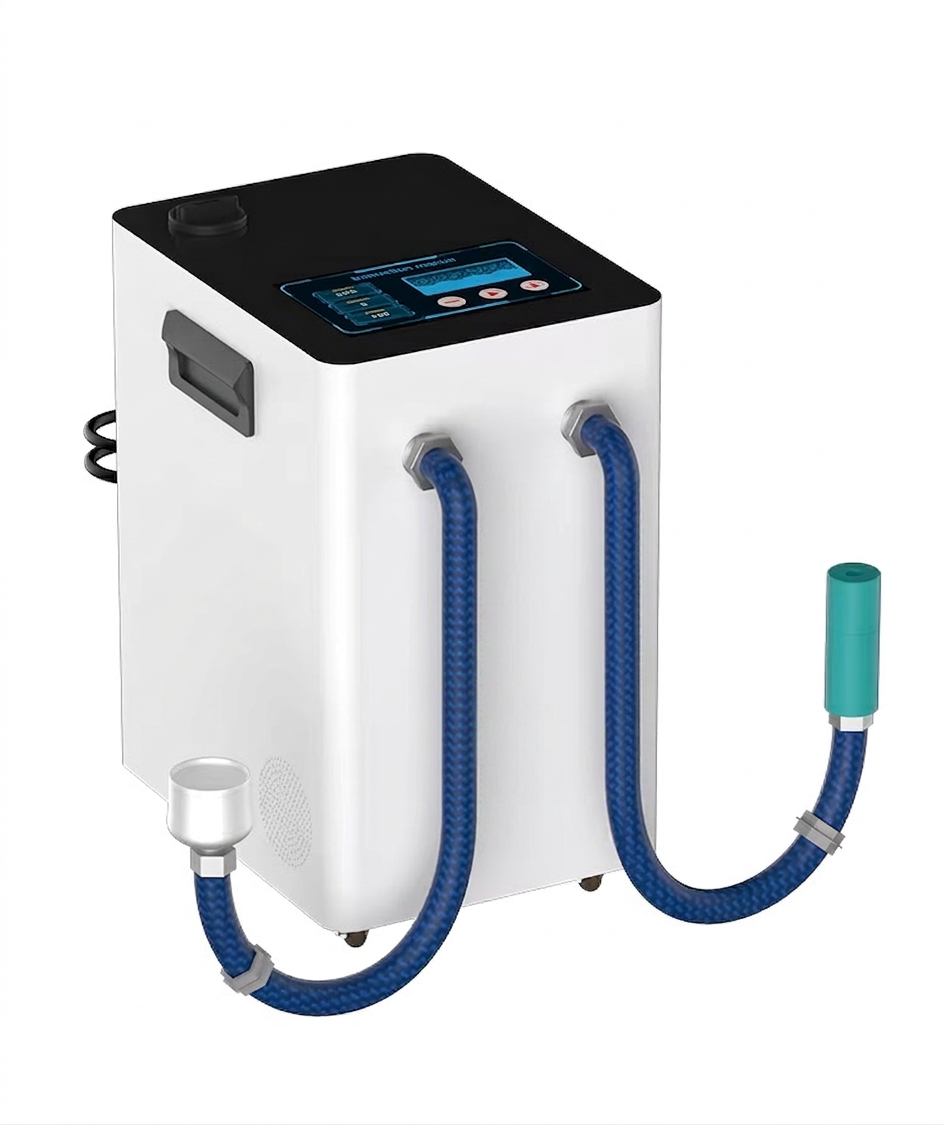
HERO Bath Hydrogen Nano-bubble System
PEM/SPE nano-bubble system that hydrogenates bath, spa and hot-tub water on site at 3.75 L/min, with 99.991% hydrogen purity at the membrane.
- 3.75 L/min
- >2,000 ppb H₂
- 99.991% purity
- PEM/SPE nano-bubble
Continue reading
In this hub
Other modality comparisons
- Hydrogen bathing vs infrared saunas
- Hydrogen bathing vs PEMF therapy
- Hydrogen bathing vs hydrogen inhalation
- Hydrogen bathing vs massage chairs
- Hydrogen bathing — category overview
- PEM/SPE pure-water electrolysis — technology explainer
- PEM vs SPE / alkaline electrolysis
- Evidence cluster index — molecular hydrogen research
- HERO Bath — hydrogen bathing system specifications
Referenced research
- Photobiomodulation research overview (PubMed)
- Hydrogen-rich water bathing / topical hydrogen studies (PubMed)
- Molecular hydrogen as a biological signalling molecule (PubMed)
- Infrared sauna / whole-body thermal therapy review (PubMed)
- Pulsed electromagnetic field therapy review (PubMed)
- Molecular hydrogen inhalation research (PubMed)
Frequently asked questions
Hydrogen Machines systems are general wellness devices. They are not medical devices and are not intended to diagnose, treat, cure or prevent any disease or medical condition. Research referenced on this page is provided for context only and does not describe outcomes you should expect. Consult a qualified health professional before changing any wellness routine, particularly if you are pregnant, have a cardiovascular condition, or are sensitive to heat or immersion.