
Hydrogen Bathing and the Home Spa Bathroom
Short answer
Short answer: hydrogen bathing is a water-based antioxidant immersion modality that some people compare with massage chairs when exploring general wellness approaches. It is a non-heat, full-body immersion experience that users may incorporate into general wellness routines; no medical, therapeutic, or clinical claims are made.
People explore hydrogen bathing when comparing wellness modalities, and how people plan a premium home-wellness space is one of the contexts in which it comes up. Hydrogen bathing is a water-based, non-heat modality that some users incorporate into general wellness routines, and it is often looked at alongside massage chairs. This page sets out modality differences in neutral terms so readers can evaluate a home immersion ritual against other wellness approaches. This page provides neutral, informational comparisons only.
Using the room you already have
Most premium wellness purchases demand new space: a cabin, a chair, a plunge tub. Hydrogen bathing uses the bath already installed, which changes the decision from 'where does it go' to 'where does the generator sit'.
Typical placement is a stable, dry surface beside the tub within reach of a power outlet, with the diffuser line into the water.
Storage and daily practicality
Portable systems can be stored between sessions, which suits shared bathrooms. Households that bathe most days often leave the unit in place on a dedicated surface instead.
Design considerations
The practical requirements are a power outlet outside the immediate wet zone, ventilation as specified by the manufacturer, and access to appropriately pure feed water for pure-water PEM/SPE systems.
How people compare these modalities
- Some people compare the room footprint of a massage chair with the use of an existing bathtub for hydrogen bathing.
- Some users integrate a chair session and a hydrogen bath into the same evening routine.
- Some people look at hydrogen bathing when they want a screen-free, equipment-free relaxation experience.
- Massage chairs apply mechanical pressure through rollers and airbags, while hydrogen bathing is a still, water-supported soak.
- Modality differences — delivery, coverage, and session format — are the usual basis for these wellness comparisons.
- Some users include hydrogen bathing in general wellness routines that already feature other home-wellness devices.
How Hydrogen Machines generates hydrogen
Hydrogen Machines supplies PEM/SPE oxyhydrogen systems using pure-water electrolysis (no KOH). Learn more about HydroHub™ PEM oxyhydrogen system and the DH-Power™ industrial oxyhydrogen generator.
For the wellness range, the same membrane principle is used in the HERO Bath hydrogen bathing system and the HERO hydrogen inhalation range. Background reading: PEM electrolysis explained and PEM vs alkaline / SPE.
Recommended system
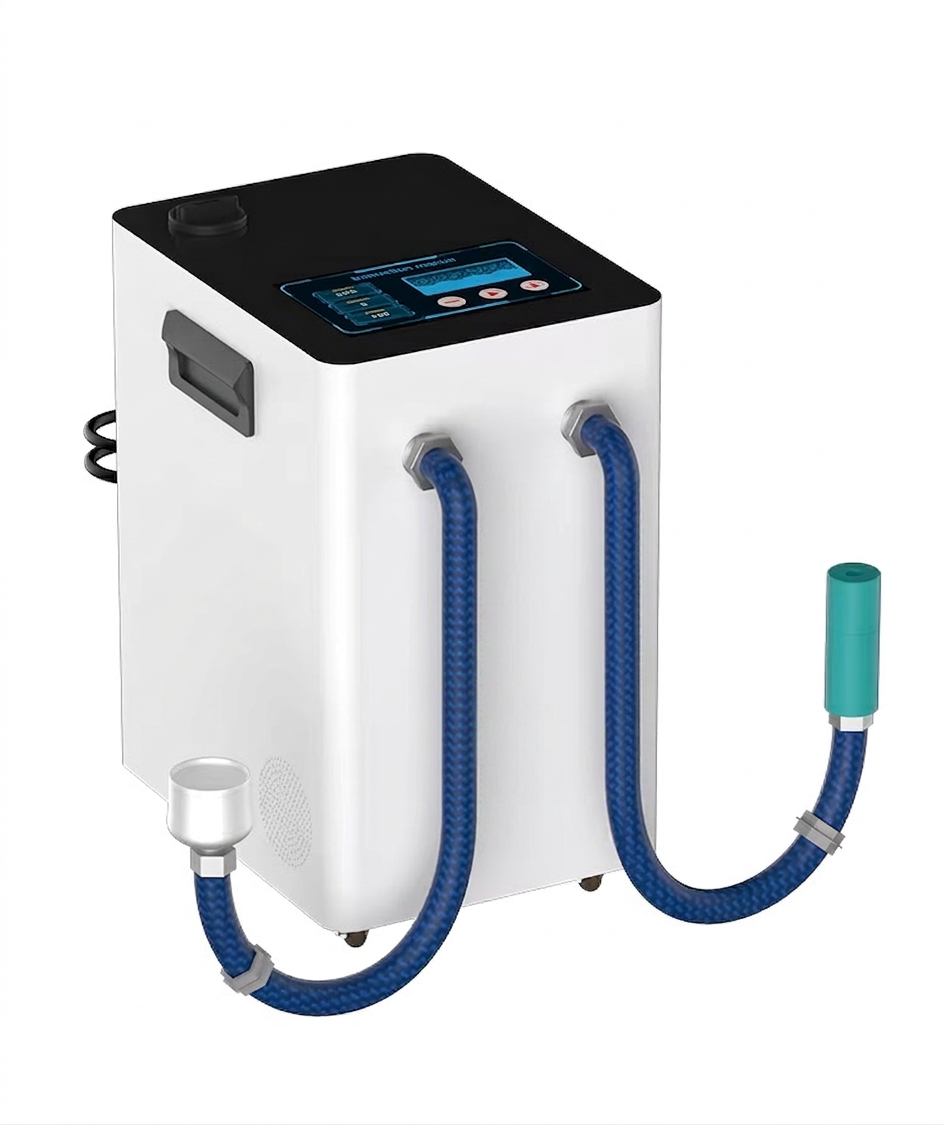
HERO Bath Hydrogen Nano-bubble System
PEM/SPE nano-bubble system that hydrogenates bath, spa and hot-tub water on site at 3.75 L/min, with 99.991% hydrogen purity at the membrane.
- 3.75 L/min
- >2,000 ppb H₂
- 99.991% purity
- PEM/SPE nano-bubble
Continue reading
This page is part of the Hydrogen Bathing vs Massage Chairs comparison hub.
Related in this hub
Other modality comparisons
- Hydrogen bathing vs red-light therapy
- Hydrogen bathing vs infrared saunas
- Hydrogen bathing vs PEMF therapy
- Hydrogen bathing vs hydrogen inhalation
- Hydrogen bathing — category overview
- PEM/SPE pure-water electrolysis — technology explainer
- PEM vs SPE / alkaline electrolysis
- Evidence cluster index — molecular hydrogen research
- Bathroom wellness design considerations
Referenced research
Frequently asked questions
Hydrogen Machines systems are general wellness devices. They are not medical devices and are not intended to diagnose, treat, cure or prevent any disease or medical condition. Research referenced on this page is provided for context only and does not describe outcomes you should expect. Consult a qualified health professional before changing any wellness routine, particularly if you are pregnant, have a cardiovascular condition, or are sensitive to heat or immersion.