
Hydrogen Bathing in a Recovery Routine
Short answer
Short answer: hydrogen bathing is a water-based antioxidant immersion modality that some people compare with PEMF devices when exploring general wellness approaches. It is a non-heat, full-body immersion experience that users may incorporate into general wellness routines; no medical, therapeutic, or clinical claims are made.
People explore hydrogen bathing when comparing wellness modalities, and wind-down routines after training or long days is one of the contexts in which it comes up. Hydrogen bathing is a water-based, non-heat modality that some users incorporate into general wellness routines, and it is often looked at alongside PEMF devices. This page sets out modality differences in neutral terms so readers can evaluate a whole-body immersion at the end of the day against other wellness approaches. This page provides neutral, informational comparisons only.
Slots, not rankings
Recovery routines are usually built from slots: something short and dry that can happen daily, something targeted for specific areas, and something longer and passive at the end of the day. Devices compete for slots rather than for a single ranking.
Hydrogen bathing is a strong fit for the long passive slot because it needs no positioning, attention or effort.
Practical weekly shape
A commonly reported shape is a short PEMF or light session on most days, plus two to four hydrogen baths a week. This is preference, not a validated protocol.
What is measurable
Track what can be tracked: session frequency, soak duration, water volume and dissolved hydrogen concentration. Subjective recovery ratings are personal and should be treated as such.
How people compare these modalities
- Active people sometimes compare hydrogen bathing with PEMF when structuring weekly wellness routines.
- PEMF devices deliver pulsed fields through a mat or coil, while hydrogen bathing is an immersion in hydrogen-rich water.
- People exploring recovery-focused routines sometimes look at both PEMF sessions and hydrogen bathing.
- Hydrogen bathing and PEMF differ in delivery mechanism, and neither is presented as a substitute for the other.
- People explore hydrogen bathing when comparing wellness modalities across heat, light, field, and water formats.
- Modality differences — delivery, coverage, and session format — are the usual basis for these wellness comparisons.
How Hydrogen Machines generates hydrogen
Hydrogen Machines supplies PEM/SPE oxyhydrogen systems using pure-water electrolysis (no KOH). Learn more about HydroHub™ PEM oxyhydrogen system and the DH-Power™ industrial oxyhydrogen generator.
For the wellness range, the same membrane principle is used in the HERO Bath hydrogen bathing system and the HERO hydrogen inhalation range. Background reading: PEM electrolysis explained and PEM vs alkaline / SPE.
Recommended system
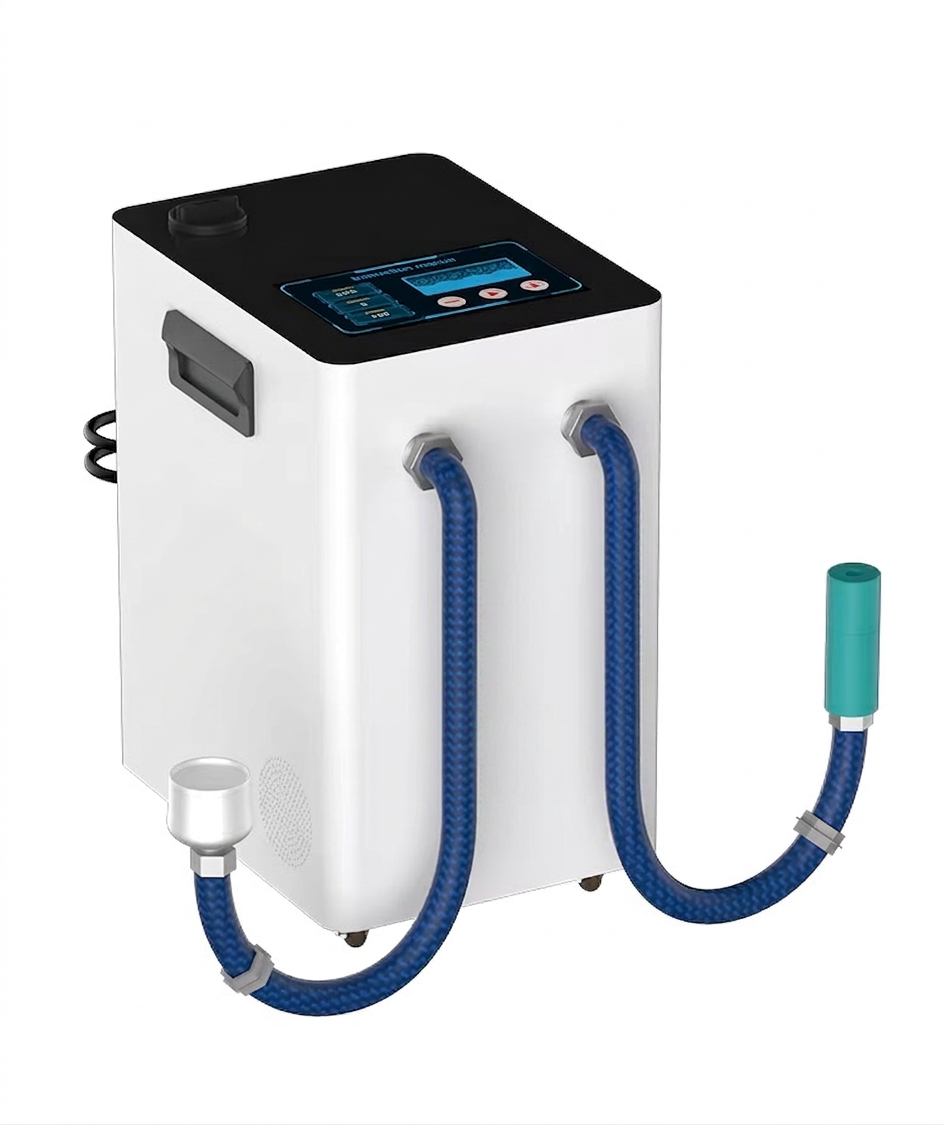
HERO Bath Hydrogen Nano-bubble System
PEM/SPE nano-bubble system that hydrogenates bath, spa and hot-tub water on site at 3.75 L/min, with 99.991% hydrogen purity at the membrane.
- 3.75 L/min
- >2,000 ppb H₂
- 99.991% purity
- PEM/SPE nano-bubble
Continue reading
This page is part of the Hydrogen Bathing vs PEMF Therapy comparison hub.
Related in this hub
Other modality comparisons
- Hydrogen bathing vs red-light therapy
- Hydrogen bathing vs infrared saunas
- Hydrogen bathing vs hydrogen inhalation
- Hydrogen bathing vs massage chairs
- Hydrogen bathing — category overview
- PEM/SPE pure-water electrolysis — technology explainer
- PEM vs SPE / alkaline electrolysis
- Evidence cluster index — molecular hydrogen research
Referenced research
Frequently asked questions
Hydrogen Machines systems are general wellness devices. They are not medical devices and are not intended to diagnose, treat, cure or prevent any disease or medical condition. Research referenced on this page is provided for context only and does not describe outcomes you should expect. Consult a qualified health professional before changing any wellness routine, particularly if you are pregnant, have a cardiovascular condition, or are sensitive to heat or immersion.